Why the Wagyu Sando Became the Global Entry Point to Japanese Beef Culture
From convenience stores in Tokyo to fine dining in New York — how one sandwich changed the way the world encounters Wagyu
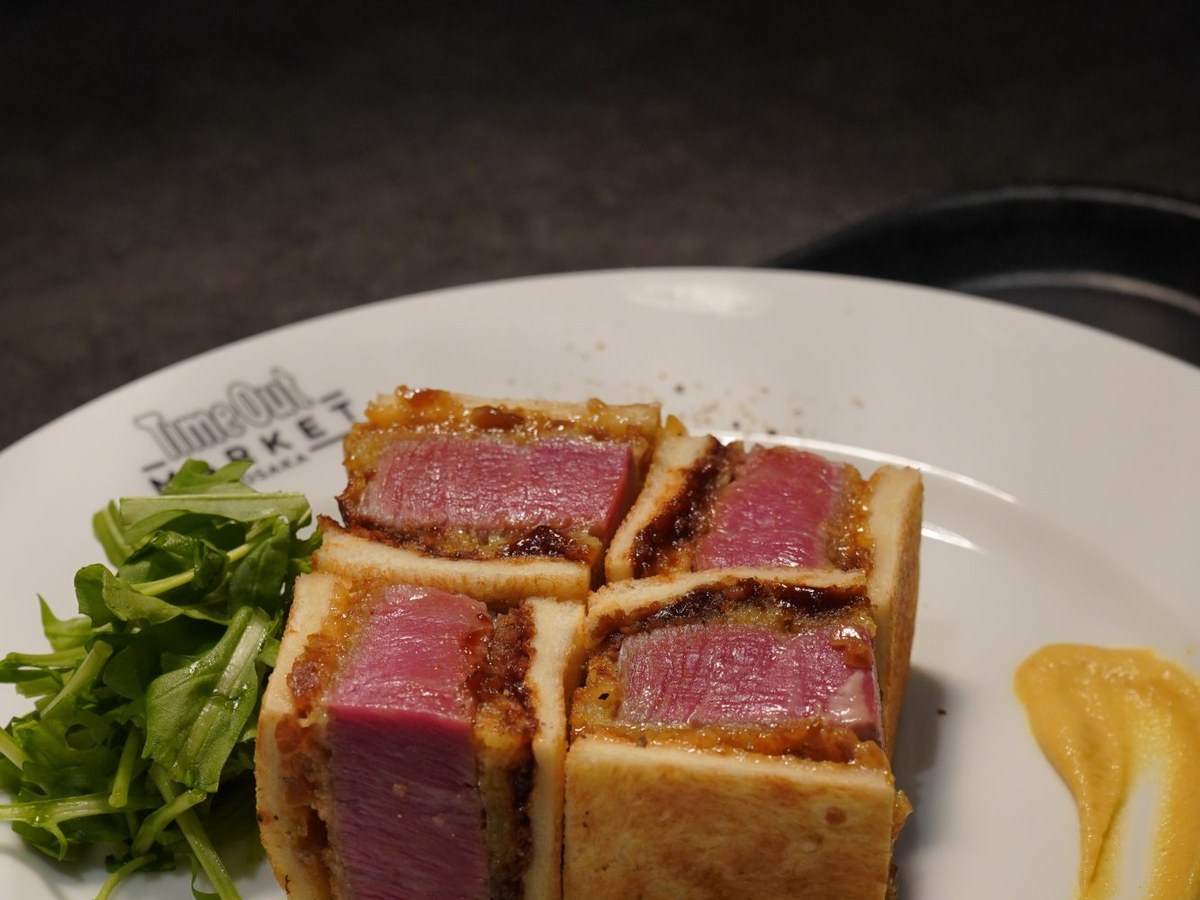
From convenience stores in Tokyo to fine dining in New York — how one sandwich changed the way the world encounters Wagyu
There is a sandwich that has done more to introduce the world to Japanese Wagyu than any restaurant, any marketing campaign, or any travel guide. It is served at convenience stores, inside department stores, at dedicated sando counters, and in Michelin-starred tasting menus. It is the Wagyu sando — and it has quietly become one of the most culturally significant expressions of Japanese beef culture in the world.
A sando, in Japanese, is simply a sandwich. But the Wagyu sando — thick-cut, panko-breaded or simply seared Wagyu, pressed between soft white shokupan milk bread, often trimmed to a perfect rectangle — is something considerably more deliberate than its name suggests.
The format solves a problem that has always complicated Wagyu's relationship with international diners: richness. A5 Wagyu is extraordinarily fatty. A full steak portion, eaten alone, can overwhelm even an experienced diner. But a sando portion — typically 60 to 100 grams of premium beef — delivers the full character of the meat in a quantity that is approachable, shareable, and photographable without being excessive. It is Wagyu in its most democratic form.
"The sando delivers the full character of Wagyu in a quantity that is approachable, shareable, and photographable. It is Japanese beef in its most democratic form."
The Wagyu katsu sando — the breaded, fried version — has roots in the Japanese katsu sando tradition that goes back decades. But the specific phenomenon of premium Wagyu being presented in sandwich form as a destination food, rather than a casual lunch option, is more recent. It emerged in Osaka and Tokyo in the early 2010s as chefs began experimenting with ways to make high-quality beef accessible to younger diners and walk-in visitors who could not or would not commit to a full omakase course.
The format reached international awareness through social media. A perfectly composed Wagyu sando — cross-section visible, marbling apparent, bread pressed clean — photographs exceptionally well. Food media in the United States, Australia, and the UK began covering it as a phenomenon around 2017 to 2019. By the time international travel resumed after 2022, the Wagyu sando was firmly established on the must-eat lists of food tourists visiting Japan.
Some restaurants have taken the sando beyond a menu item and made it the conceptual foundation of their entire approach. Niku to Ieba Matsuda, which began in Nara and expanded to Osaka and multiple other locations, built its brand around the idea that the Wagyu sando is the ideal entry point to a broader story about beef culture. The sandwich is accessible; the philosophy behind it — provenance, aging, the specific qualities of Yamato beef — is not simplified to match. The sando opens the door; the full story is available for those who want to walk through it.
This approach — using an accessible format to carry a serious message — has proven genuinely influential. It is one reason the sando has spread beyond Japan more successfully than almost any other Japanese beef format.
Wagyu sandos now appear on menus in New York, London, Singapore, Sydney, and Hong Kong. The quality varies enormously. Some use authentic Japanese A5; many use American or Australian Wagyu crossbreeds marketed with the Wagyu name. A small number have understood what makes the format meaningful — the quality of the beef, the specific character of shokupan, the restraint of the seasoning — and executed it with fidelity to the original.
For diners encountering Wagyu through the sando format outside Japan, the experience can be the beginning of a longer curiosity. What is this beef? Where does it come from? Why does it taste different from anything I've had before? The best sandos in the world answer those questions not with words but with the food itself. And the questions, once asked, tend to lead somewhere interesting.
"The best sandos answer the question — what makes this beef different — not with words but with the food itself. And the questions, once asked, tend to lead somewhere interesting."
The story of the Wagyu sando's global spread is ultimately a story about accessibility without compromise. The format reduced the barrier to entry — financial, cultural, logistical — without reducing the quality of what was being offered. It made one of the world's most extraordinary ingredients available to people who would never book an omakase counter or fly to Kobe. And it did so on its own terms, carrying the culture with it rather than diluting it for export.
That is harder than it sounds. Most luxury food products, when they travel internationally, become simplified versions of themselves. The Wagyu sando, at its best, did the opposite. It became a richer object — more loaded with meaning, more connected to a broader story — the further it travelled from its origins. That is what the best cultural exports do.
The Wagyu Record
Weekly dispatches on Wagyu culture, trade, and the people behind the world's most extraordinary beef.
No spam. Unsubscribe any time.