Olive Wagyu
The Distinctive Beef of Shodoshima, Explained
The Distinctive Beef of Shodoshima, Explained
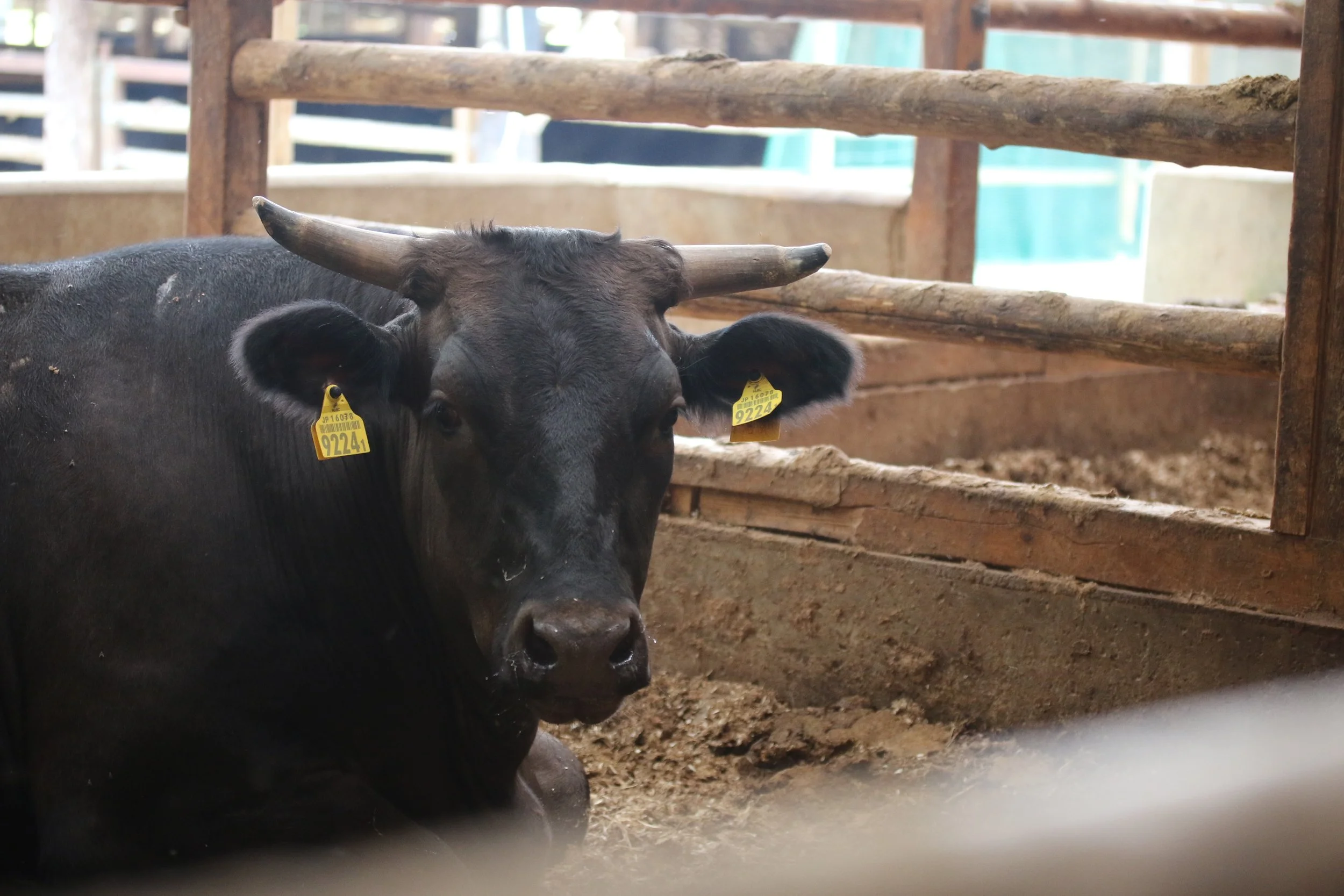
They are raised on a small island in the Seto Inland Sea, fed on a diet that includes the by-products of olive oil production, and produce beef with a fat profile unlike anything else raised in Japan. This is Olive Wagyu — and the story behind it is as distinctive as the beef itself.
Shodoshima is a small island in Kagawa Prefecture, known throughout Japan for two things: its olive groves and its soy sauce breweries. The island grows more olives than anywhere else in Japan, and the olive oil production that results generates significant quantities of olive pulp — the solid material that remains after the oil has been pressed out.
In the early 2000s, a Kagawa Prefecture agricultural researcher named Masaki Ishii began experimenting with feeding this olive pulp to Wagyu cattle, mixed into their regular feed alongside rice straw and grain concentrates. The hypothesis was that the high oleic acid content in olives — the same monounsaturated fatty acid that gives olive oil its characteristic flavour and health properties — might influence the fat composition of the beef.
It did. Significantly.
Oleic acid is a monounsaturated omega-9 fatty acid. In olive oil, it accounts for somewhere between 55% and 83% of total fatty acid content — it is what gives extra virgin olive oil its smooth, mild character and its association with cardiovascular health.
In Wagyu fat, oleic acid is already present in higher proportions than in conventional beef. This is one of the reasons Wagyu fat has a lower melting point than standard beef fat — monounsaturated fats melt at lower temperatures than saturated fats. But in Olive Wagyu, the oleic acid content is measurably higher still. The olive pulp in the diet appears to directly influence the fatty acid composition of the intramuscular fat that develops during the fattening period.
The practical result, experienced in the eating, is a fat that melts at an even lower temperature, with a distinctly sweet and aromatic finish that experienced tasters describe as reminiscent of — though not identical to — the olive oil itself. It is subtle. It is not overwhelming. But once you know what you are tasting for, it is unmistakable.
"The oleic acid content in Olive Wagyu fat is measurably higher than standard A5. The result is a fat that melts at an even lower temperature — with a distinctly sweet, aromatic finish unlike any other Wagyu."
Olive Wagyu is constrained by geography in a way that even the most strictly protected Japanese beef designations are not. Kobe Beef is limited by certification requirements — only cattle from pure Tajima bloodlines, raised in Hyogo Prefecture, achieve the designation — but the theoretical ceiling on production is relatively high. The practical ceiling on Olive Wagyu is the olive pulp supply of a single island.
Shodoshima produces a finite quantity of olive pulp each year. The amount of that pulp available for cattle feed is limited by the demands of the olive oil industry itself. The number of cattle that can be raised on a meaningful olive pulp diet is therefore directly constrained by the island's production capacity. There is no way to scale this operation without moving it to another location — and moving it to another location would make it something else entirely.
This is why Olive Wagyu production remains small-scale and island-specific. It is not a commercial decision. It is a physical one — constrained by the annual olive pulp output of a single island.
Olive Wagyu is exported in very small quantities. A handful of specialist importers in the United States, Australia, and Singapore have access to limited allocations. When it appears on restaurant menus outside Japan, it typically arrives as a single cut — a small tasting portion — rather than as the centrepiece of a full course. Its rarity means it is priced at a significant premium even relative to other A5 Wagyu.
In Japan, it appears most frequently in Kagawa Prefecture itself, in high-end restaurants in Osaka and Tokyo that have direct relationships with Shodoshima producers, and occasionally in omakase courses where the chef uses it as a singular moment within a broader Wagyu progression. If you encounter it, the appropriate response is to pay attention. It is a beef with a genuinely distinct production method and flavour profile — worth understanding on its own terms.
The Wagyu Record
Weekly dispatches on Wagyu culture, trade, and the people behind the world's most extraordinary beef.
No spam. Unsubscribe any time.