The Price of Craft
Why Japanese Wagyu Costs More in 2026 — and the trade politics behind your plate
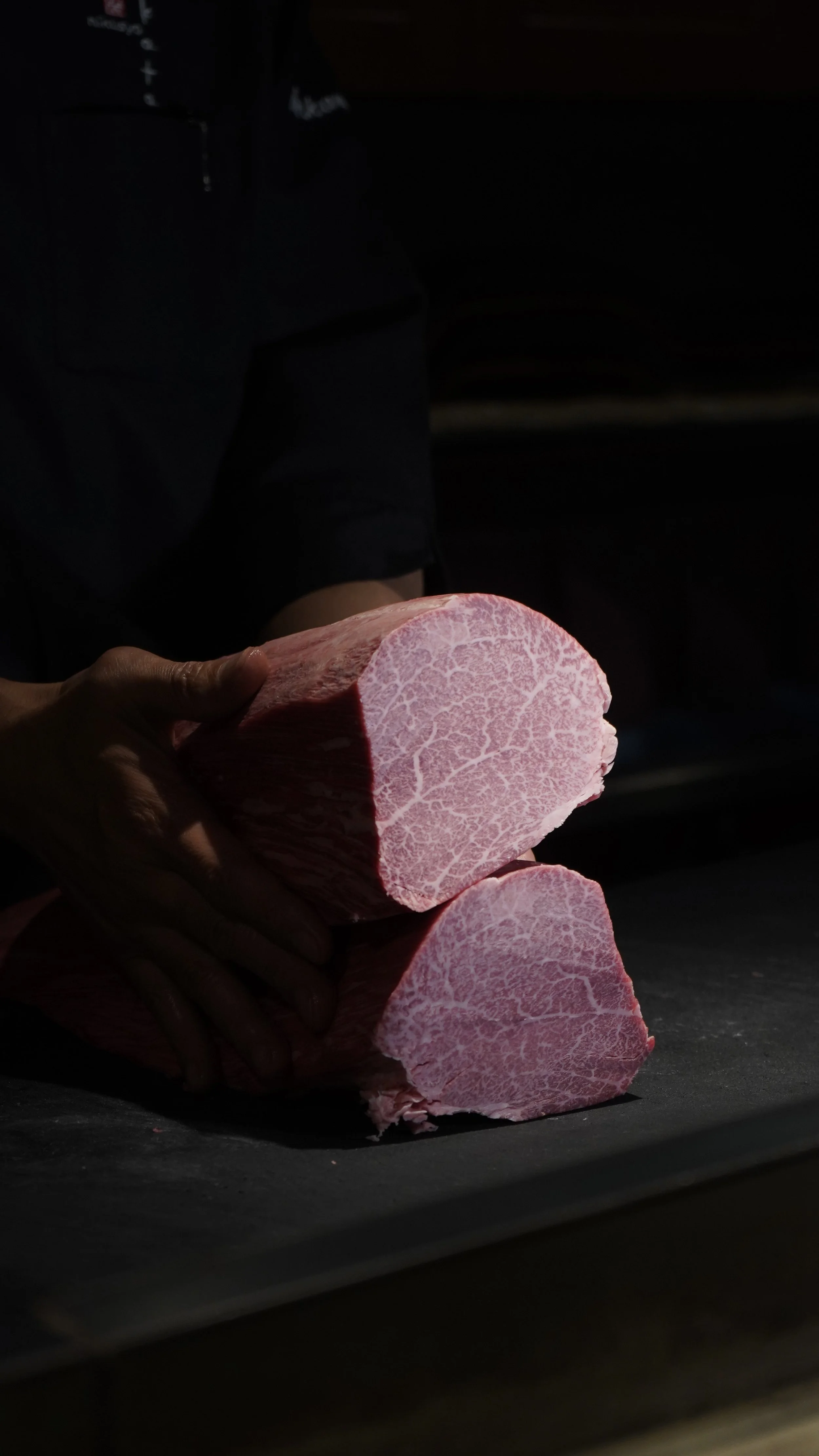
Why Japanese Wagyu Costs More in 2026 — and the trade politics behind your plate
There is a tariff hidden inside your A5 Wagyu steak. Most diners don't see it — but every farmer in Hyogo, every importer in Los Angeles, and every restaurant operator in New York has felt it. This is the story of how a bureaucratic quota mechanism became one of the most disruptive forces in Japanese beef culture.
The United States operates a tariff-rate quota (TRQ) on beef imports — a system that allows a set volume of foreign beef to enter at a lower duty, with a steep 26.4% tariff applying to any imports that exceed the annual ceiling. In principle, it is designed to protect domestic producers while permitting a measured flow of international product. In practice, it has become something else entirely for Japanese Wagyu.
The structural problem is straightforward. Brazil, once ineligible to export beef to the United States, gained market access and was folded into the same quota category as Japan. Since then, Brazilian beef shipments have dominated the allocation. In 2025, the quota was filled within 17 days. In 2026, it was exceeded on January 6th — with approximately 99% of that quota consumed by Brazilian exports, leaving Japanese Wagyu importers to absorb a 26.4% tariff for the remaining 360 days of the year.
For commodity beef, a tariff of this magnitude is painful but manageable. For Japanese A5 Wagyu — which can trade at $150 to $300 per pound wholesale — the mathematics are punishing. The tariff is applied ad valorem, meaning the higher the value of the beef, the more expensive the duty. Premium becomes a liability.
"For commodity beef, the tariff is painful. For A5 Wagyu at $200 per pound, it is a different order of problem entirely."
What makes the current situation particularly sharp is the contrast with how the United States has treated other trading partners. The U.S.–UK trade agreement carved out a 13,000-metric-ton allocation for British beef within the same quota framework. Argentina was recently granted a 100,000-metric-ton allocation. Japan — one of America's closest strategic and economic allies, and the country that has been the largest or second-largest export market for U.S. beef for decades — receives no such carve-out.
The 2020 U.S.–Japan Trade Agreement (USJTA) delivered meaningful tariff reductions for U.S. agricultural products into Japan, and Japan simultaneously liberalised access for beef from cattle over 30 months of age. The bilateral relationship, on paper, reflects decades of goodwill and mutual agricultural benefit. Yet the structural barrier remains.
A TRQ allows imports up to a set volume at a lower duty rate. Once that threshold is exceeded, a higher "out-of-quota" tariff applies to all subsequent imports — regardless of origin, product type, or quality. For the U.S. beef TRQ, that rate is 26.4%. Japanese Wagyu's premium pricing makes the ad valorem duty proportionally more expensive than for commodity beef from other origins.
Under sustained pressure from U.S. trade negotiators, Japan liberalises its beef market over three years — a process that became a model for subsequent bilateral agricultural agreements. U.S. beef exports to Japan grow rapidly.
Following a decade-long ban after Japan's 2001 foot-and-mouth disease outbreak, authentic Japanese Wagyu beef re-enters the American market. A5 imports resume and begin building a dedicated audience.
The USJTA enters into force, reducing Japanese tariffs on U.S. beef from 38.5% toward 9% over 15 years. Japan also lifts age restrictions on U.S. beef imports — but the TRQ structure for Japanese beef remains unresolved.
The U.S. beef import quota is exceeded on January 6th — just six days into the new year. Approximately 99% of the quota has been consumed by Brazilian shipments. Japanese Wagyu faces the 26.4% tariff for the remaining 360 days of 2026.
Japanese Prime Minister Sanae Takaichi meets with President Donald Trump at the White House, with trade and reciprocal market access forming part of the agenda alongside broader geopolitical discussions.
Trade policy has a way of existing in the abstract — percentages, thresholds, metric tons — until it doesn't. For farmers in Hyogo, Kagoshima, and Miyazaki, the economics of Wagyu production are already extraordinary in their demands. Cattle are raised for 28 to 36 months — nearly double the raising period of conventional beef. Feed programs are carefully managed. Herd sizes are small; many farms raise only a few dozen animals at a time.
For importers — the specialists who build relationships with Japanese prefectural co-ops, who manage cold chain logistics across oceans, who navigate USDA inspection and customs documentation — the tariff arrives as a multiplication of already significant landed costs. The most valuable product they carry becomes the most tariff-exposed.
For restaurants, the calculus is particularly difficult. A five-ounce A5 portion priced at $85 before the tariff escalation may need to move to $105 to preserve margin — a 24% menu increase that, without context, reads to diners simply as inflation. The story behind the number is rarely told.
Trade specialists and industry advocates have made a clear structural argument: Japanese Wagyu is not a commodity product competing with domestic American beef in a meaningful way. It occupies a different category entirely — artisanal, low-volume, high-value, and culturally specific. The proposed solution is a dedicated high-quality beef (HQB) import quota for Japan — a country-specific allocation that would separate premium Wagyu from the bulk beef flows that currently exhaust the TRQ within days.
Japan has been the United States' largest or second-largest beef export market by value for much of the past three decades. It liberalised its own beef market in the late 1980s and early 1990s under U.S. pressure — a process that, by the mid-2020s, resulted in Japan importing approximately 65% of its total beef consumption. The trade relationship, viewed historically, has moved substantially in America's favour. The current tariff dynamic represents an unusual reversal.
The March 19th White House meeting carried more agenda items than any single product category. In the meantime, the market adapts. Some importers are shifting toward frozen product — which can be timed more strategically around quota windows. Some restaurant operators are re-evaluating sourcing. And some, committed to the provenance and craft of authentic Japanese A5, are simply absorbing the cost and explaining it to their guests.
Trade policy isn't abstract. It's the reason a Hyogo farmer adjusts his margins. The reason an LA importer does harder math. The reason your A5 costs more this year.
Until then, the 26.4% tariff is baked into the supply chain. And the people who carry the cost of that — the farmers who don't set trade policy, the importers who navigate it, the restaurants that explain it — continue to do the work that makes Japanese Wagyu reach a table at all. That work deserves to be understood. That is what we are here for.
The Wagyu Record
Weekly dispatches on Wagyu culture, trade, and the people behind the world's most extraordinary beef.
No spam. Unsubscribe any time.